1. Period Pain: What's Normal and What's Not?
Why Do Periods Hurt Even When Nothing Is Wrong?
Many women experience painful menstrual cramps every month. The good news is that pain does not always mean that something is wrong.
In fact, the most common cause of period pain is a condition called primary dysmenorrhea, which refers to menstrual cramps that occur in the absence of an underlying gynecologic disease.
Understanding why this happens can help reassure women and guide effective symptom management.
What Is Primary Dysmenorrhea?
Primary dysmenorrhea is menstrual pain that occurs without any identifiable pelvic abnormality.
Unlike conditions such as endometriosis or adenomyosis, the uterus and pelvic organs are structurally normal.
The pain results from natural physiologic processes that occur during menstruation.
Why Does It Happen?
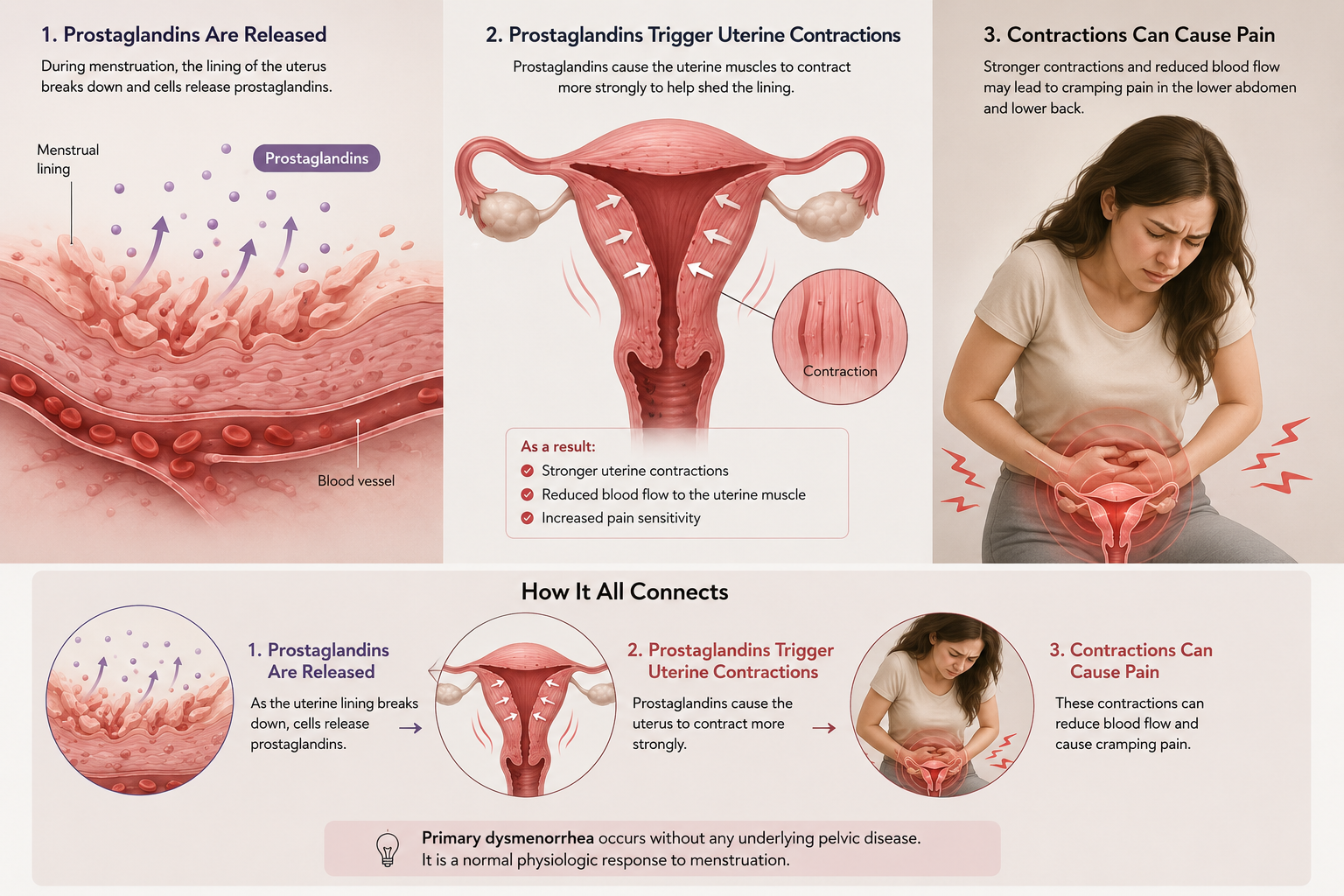
During menstruation, the lining of the uterus breaks down and releases substances called prostaglandins.
Prostaglandins stimulate the uterus to contract in order to shed its lining.
Higher prostaglandin levels can lead to:
Stronger uterine contractions
Reduced blood flow to the uterine muscle
Increased sensitivity to pain
As a result, women may experience cramping pain during their menstrual period.
What Does the Pain Feel Like?
Typical symptoms include:
Cramping pain in the lower abdomen
Lower back discomfort
Pain radiating to the thighs
Nausea
Diarrhea
Fatigue
Headaches
Symptoms usually begin shortly before or at the onset of menstruation and are often most severe during the first one to two days of the period.
Who Is Most Commonly Affected?
Primary dysmenorrhea commonly begins during adolescence or early adulthood.
Many girls experience menstrual cramps within a few years after their first menstrual period once ovulatory cycles become established.
Symptoms often improve with age and may become less severe after pregnancy.
When Is It Likely to Be Primary Dysmenorrhea?
Features that suggest primary dysmenorrhea include:
✓ Pain begins shortly before or during menstruation
✓ Symptoms improve after the first few days of bleeding
✓ Menstrual cycles are otherwise regular
✓ No significant pelvic abnormalities are found during evaluation
✓ Symptoms have been present since adolescence
What Can Help?
Several strategies can effectively reduce symptoms:
Heat Therapy
Heating pads applied to the lower abdomen can significantly reduce pain.
Regular Exercise
Physical activity may improve circulation and decrease the severity of menstrual cramps.
Anti-inflammatory Medications
Nonsteroidal anti-inflammatory drugs (NSAIDs), such as ibuprofen or naproxen, reduce prostaglandin production and are considered first-line treatment.
For best results, these medications should be started at the onset of symptoms or just before menstruation begins.
Hormonal Contraception
Birth control pills and other hormonal methods can reduce menstrual pain by suppressing ovulation and decreasing prostaglandin production.
When Should You Consider Another Cause?
Although primary dysmenorrhea is common, not all period pain is physiologic.
You should discuss your symptoms with a healthcare provider if:
Pain is progressively worsening
Symptoms begin later in life
Heavy menstrual bleeding accompanies the pain
Pain occurs between periods
Pain does not respond to standard treatments
These features may suggest conditions such as endometriosis or adenomyosis.
The Bottom Line
Primary dysmenorrhea is the most common cause of menstrual cramps and is usually related to the normal physiologic processes of menstruation.
While painful periods can be frustrating, understanding the role of prostaglandins and uterine contractions can help explain why they occur and how they can be treated effectively.
Coming Next
In the next article, we'll discuss endometriosis, a common but often underdiagnosed condition that can cause severe menstrual pain and significantly impact quality of life.