2. Endometriosis
Endometrioma Sclerotherapy:
A Minimally Invasive Alternative to Surgery
Many women with ovarian endometriomas are told that surgery is the standard treatment option.
While surgery remains appropriate for many patients, it is not the only option.
In selected cases, a minimally invasive procedure called endometrioma sclerotherapy may provide symptom relief without removing ovarian tissue.
What Is an Endometrioma?
An endometrioma, sometimes called a "chocolate cyst," is a cyst that forms when endometriosis involves the ovary.
These cysts contain old blood and inflammatory material that accumulate over time.
Endometriomas may cause:
• Pelvic pain
• Painful periods
• Pain during intercourse
• Infertility
• Progressive enlargement of the cyst
Why Consider Alternatives to Surgery?
Laparoscopic cystectomy (surgical removal of the cyst) has long been considered the standard treatment.
However, removing an endometrioma can sometimes remove healthy ovarian tissue along with the cyst wall.
For women who wish to preserve fertility, protecting ovarian reserve is often an important consideration.
This has led physicians and researchers to explore less invasive treatment options.
What Is Endometrioma Sclerotherapy?
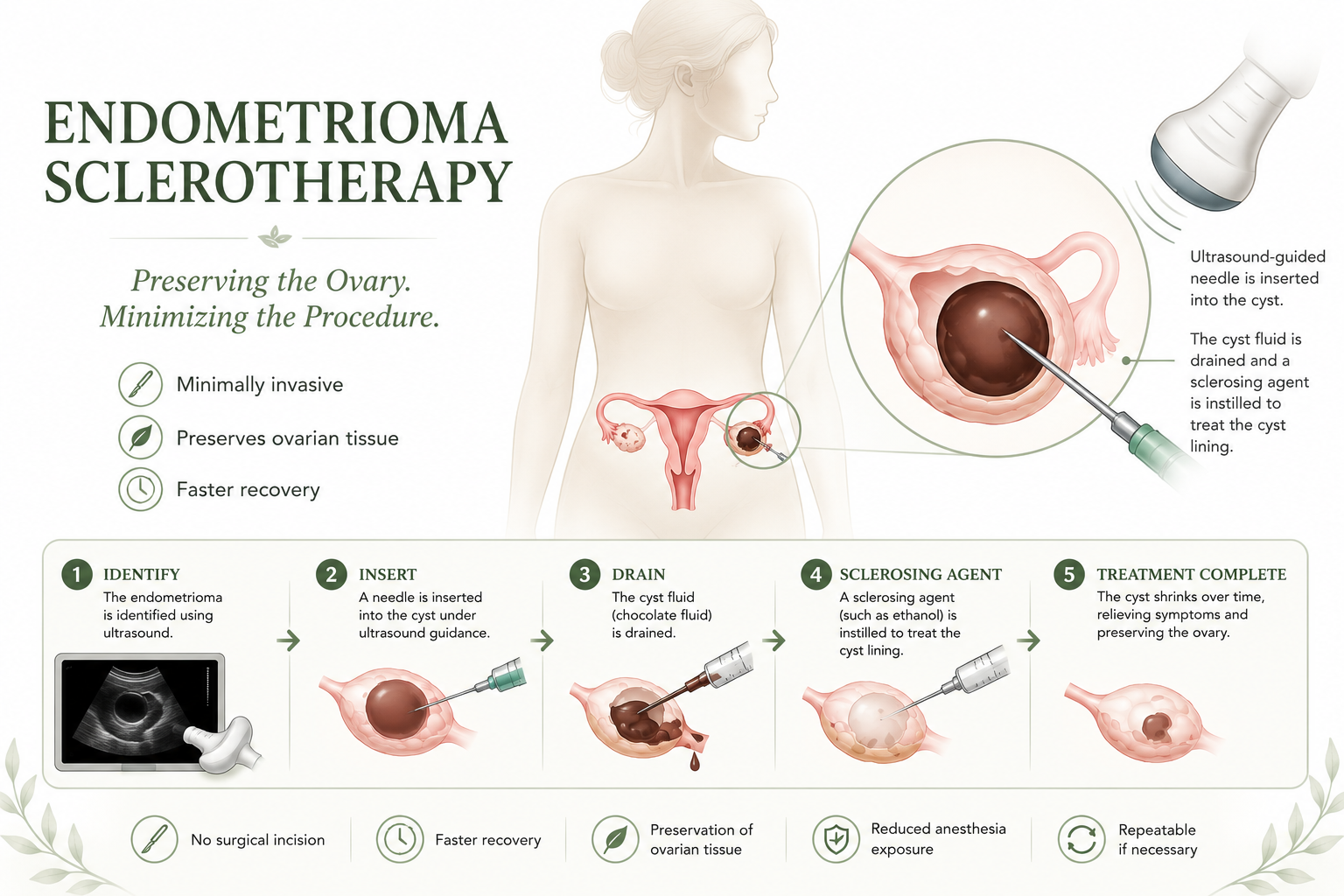
Endometrioma sclerotherapy is a minimally invasive image-guided procedure performed under ultrasound guidance.
Rather than surgically removing the cyst, a needle is inserted into the endometrioma to drain its contents. A sclerosing agent is then introduced to treat the cyst lining and reduce the chance of recurrence.
The procedure is typically performed without surgical incisions and usually allows for a rapid recovery.
How Does the Procedure Work?
The endometrioma is identified using ultrasound.
A needle is carefully inserted into the cyst under ultrasound guidance.
The cyst contents ("chocolate fluid") are drained.
A sclerosing agent, such as ethanol, is instilled into the cyst cavity.
The cyst lining is treated, allowing the cyst to shrink over time while preserving surrounding ovarian tissue.
Potential Advantages
Compared with surgery, potential benefits may include:
✓ No surgical incision
✓ Faster recovery
✓ Preservation of healthy ovarian tissue
✓ Reduced anesthesia exposure
✓ Repeatable if necessary
For women concerned about fertility preservation, maintaining ovarian reserve may be an important advantage.
Is It Right for Everyone?
Endometrioma sclerotherapy is not appropriate for every patient.
The best treatment depends on several factors, including:
• The size of the cyst
• Symptom severity
• Fertility goals
• Previous treatments
• Individual preferences
Some women may still benefit most from surgery, while others may be candidates for minimally invasive alternatives.
Treatment decisions should always be individualized and discussed with a qualified healthcare provider.
What Does the Research Show?
Published studies have reported promising outcomes with endometrioma sclerotherapy, including symptom improvement, reduction in cyst size, and preservation of ovarian reserve.
Research has suggested that image-guided sclerotherapy may serve as a valuable treatment option for selected women who wish to avoid surgery or preserve ovarian function.
The Bottom Line
For women with ovarian endometriomas, treatment options are no longer limited to medication or surgery alone.
Endometrioma sclerotherapy represents a minimally invasive alternative that may provide symptom relief while preserving healthy ovarian tissue.
Understanding all available treatment options is the first step toward making an informed decision about your care.
Coming Next
Endometrioma Surgery vs. Sclerotherapy:
What Does the Research Show About Fertility, Recurrence, and Recovery?