2. Endometriosis
Surgery vs. Non-Surgical Options
After being diagnosed with endometriosis, many women assume that surgery is their only option.
However, treatment should be individualized based on symptoms, age, fertility goals, the location of disease, and personal preferences.
For some women, surgery may be appropriate. For others, medical management or minimally invasive alternatives may provide symptom relief while avoiding surgery.
Understanding the advantages and limitations of each option is an important step toward making an informed decision.
Medical Treatment
Many women begin treatment with medications that help reduce pain and suppress the hormonal stimulation of endometriosis.
Common options include:
• Birth control pills
• Progestin therapy
• Hormonal IUDs
• GnRH agonists and antagonists
• Anti-inflammatory pain medications (NSAIDs)
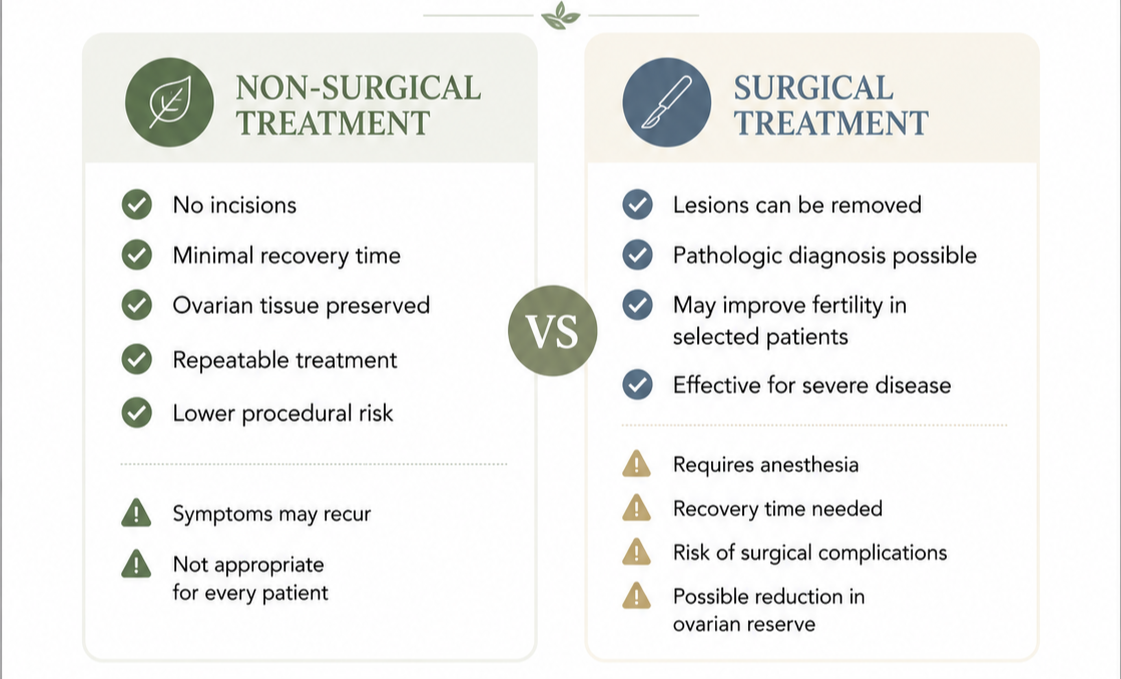
Medical therapy can be effective for symptom control, but symptoms may return after treatment is stopped, and existing lesions are not physically removed.
Surgical Treatment
Surgery may be considered when symptoms are severe, fertility is affected, or medical treatment is no longer effective.
Common surgical procedures include:
• Laparoscopic excision of endometriosis
• Laparoscopic ablation
• Endometrioma cystectomy
• Adhesiolysis (scar tissue removal)
Surgery can provide significant symptom relief and remove visible disease, but it requires anesthesia, recovery time, and carries a risk of recurrence.
Minimally Invasive Treatment Options
For selected patients, minimally invasive image-guided therapies may offer an alternative between medication and surgery.
Examples include:
• Endometrioma sclerotherapy
• Image-guided drainage and sclerosis procedures
These treatments are typically performed through a needle under imaging guidance without surgical incisions. Potential advantages include faster recovery, preservation of ovarian tissue, and avoidance of major surgery.
Key Takeaway
There is no single "best" treatment for endometriosis.
The right approach depends on:
• Your symptoms
• Age
• Fertility goals
• Disease severity
• Personal preferences
Understanding all available options—including medical therapy, minimally invasive treatments, and surgery—can help you make an informed decision about your care.