2. Endometriosis
Research Spotlight: How Minimally Invasive Treatment for Ovarian Endometrioma Has Evolved
At Her Health MD, we closely follow emerging research that may expand treatment options for women with endometriosis and ovarian endometrioma.
Ovarian endometrioma, commonly known as an endometriotic cyst, has traditionally been treated with surgery. While surgical treatment remains an important option, concerns about preserving ovarian reserve and future fertility have encouraged researchers to explore less invasive alternatives.
Over the past decade, a series of studies led by Han K and colleagues has evaluated catheter-directed ethanol sclerotherapy as a minimally invasive treatment option for ovarian endometrioma.
2018: Initial Clinical Evidence
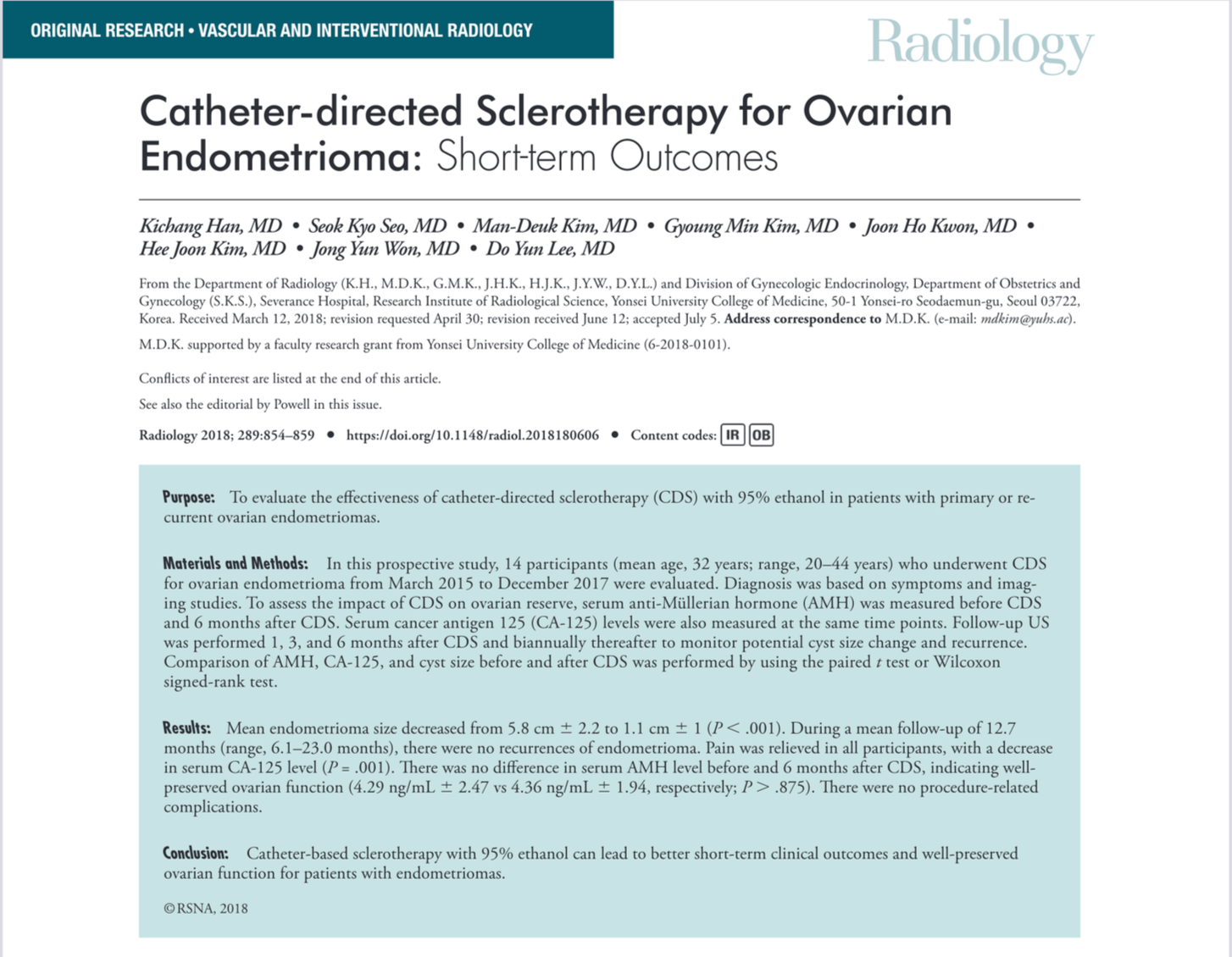
Catheter-Directed Sclerotherapy for Ovarian Endometrioma: Short-Term Outcomes
Radiology (2018)
The first major study, published in Radiology in 2018, demonstrated that catheter-directed sclerotherapy significantly reduced cyst size and improved symptoms while preserving ovarian reserve.
Importantly, the study reported no major complications and no recurrence during the follow-up period, suggesting that image-guided treatment could be a feasible alternative for selected patients.
2021: Comparing Sclerotherapy with Surgery
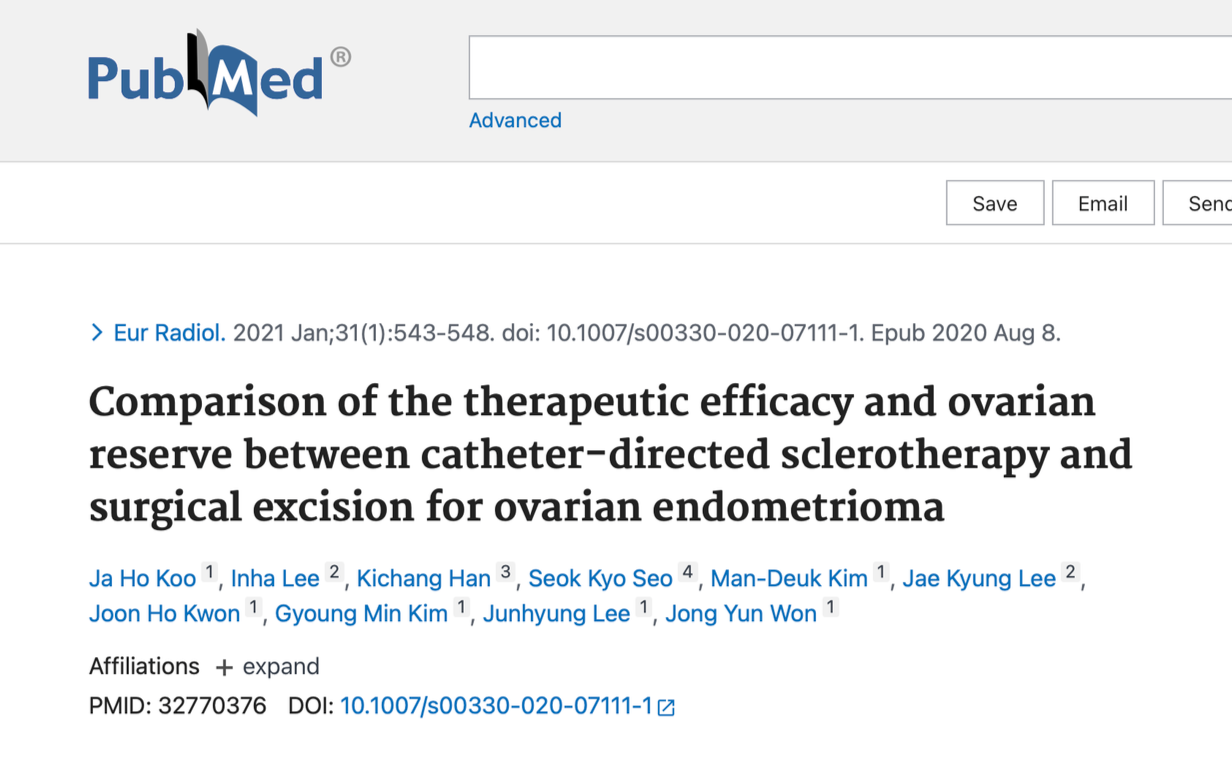
Comparison of the Therapeutic Efficacy and Ovarian Reserve Between Catheter-Directed Sclerotherapy and Surgical Excision for Ovarian Endometrioma
European Radiology (2021)
Subsequent research directly compared catheter-directed sclerotherapy with conventional surgical treatment.
The findings showed that both approaches were effective in symptom control, but sclerotherapy offered potential advantages in preserving ovarian function and reducing recovery time.
These results helped establish minimally invasive treatment as a meaningful option alongside surgery rather than simply an experimental technique.
2022: Focus on Fertility Preservation
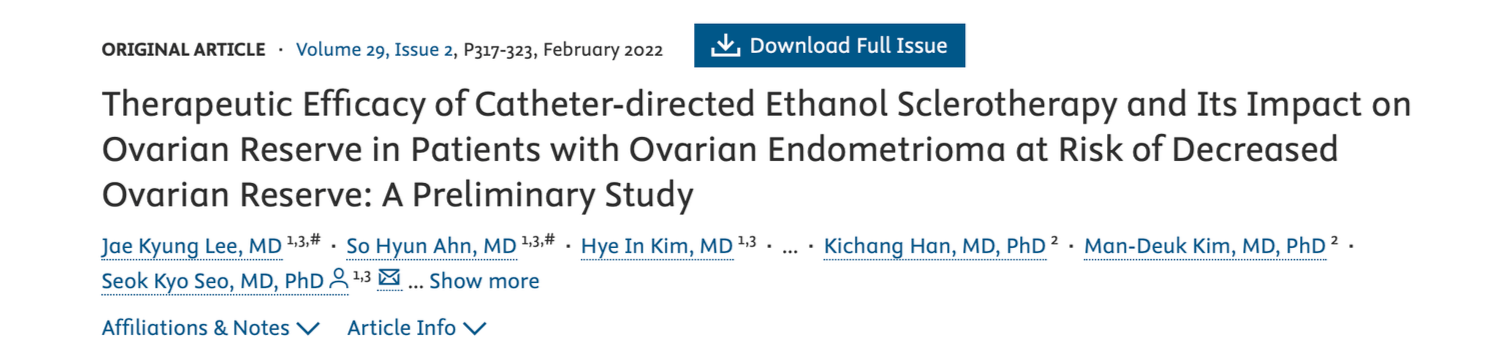
Therapeutic Efficacy of Catheter-Directed Ethanol Sclerotherapy and Its Impact on Ovarian Reserve in Patients at Risk of Decreased Ovarian Reserve
Journal of Minimally Invasive Gynecology (2022)
As fertility concerns became increasingly important for women with endometrioma, researchers evaluated the effect of sclerotherapy in patients at risk for diminished ovarian reserve.
The study found that ovarian function remained stable after treatment, supporting the potential role of sclerotherapy in women who wish to preserve fertility.
2024: Managing Recurrent Endometrioma
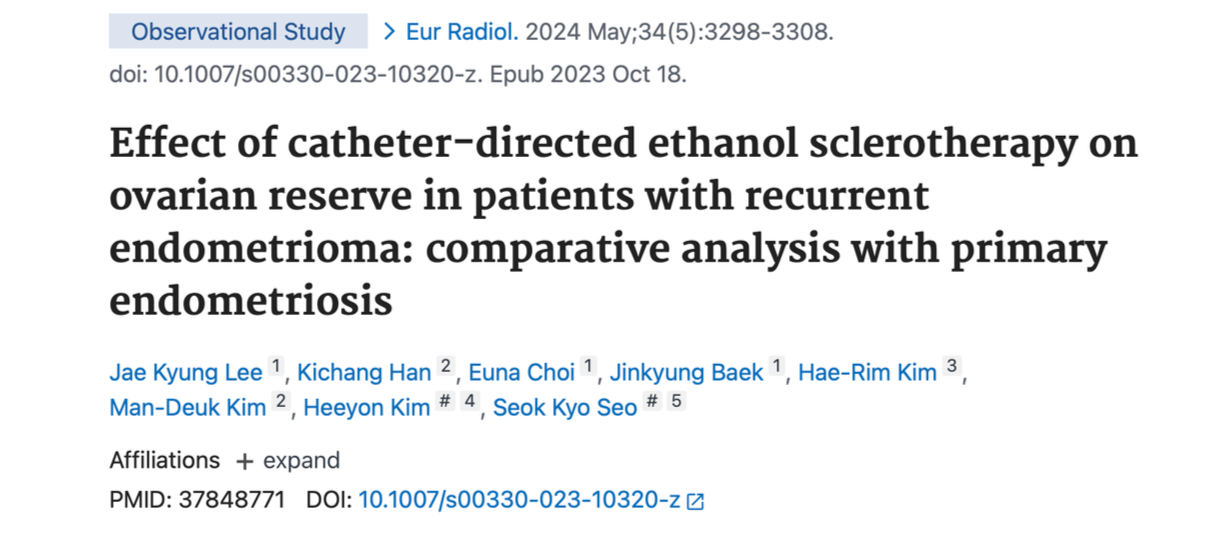
Effect of Catheter-Directed Ethanol Sclerotherapy on Ovarian Reserve in Patients with Recurrent Endometrioma
European Radiology (2024)
Recurrence remains one of the greatest challenges in endometriosis care.
Research published in 2024 focused on patients with recurrent ovarian endometriomas and demonstrated that catheter-directed sclerotherapy continued to provide favorable outcomes while maintaining ovarian reserve.
These findings suggested that minimally invasive treatment may be particularly valuable for women seeking to avoid repeat surgeries.
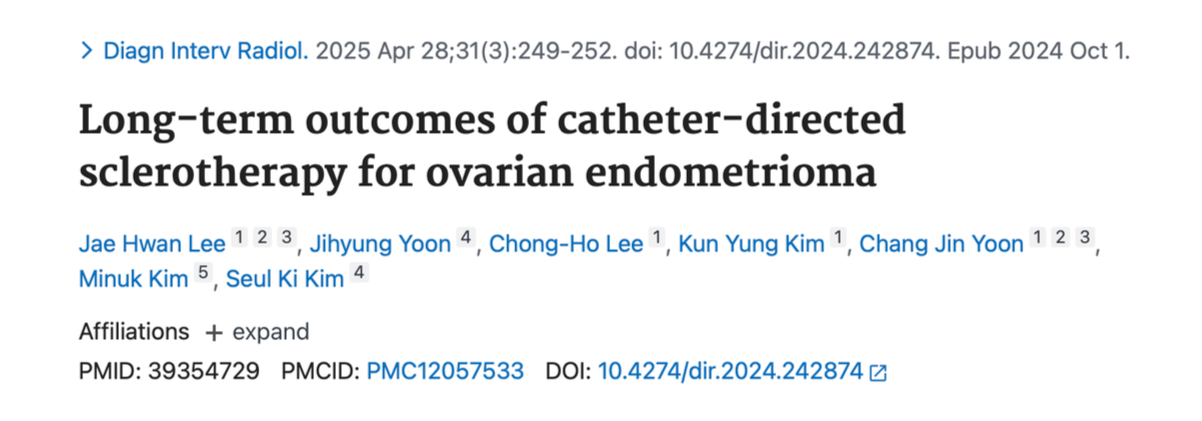
2025: Long-Term Outcomes
Long-Term Outcomes of Catheter-Directed Sclerotherapy for Ovarian Endometrioma
Diagnostic and Interventional Radiology (2025)
Most recently, long-term follow-up data have reinforced the durability and safety of catheter-directed sclerotherapy.
The results demonstrated sustained symptom improvement, continued preservation of ovarian function, and favorable long-term outcomes, providing additional evidence for its role in selected patients.
Looking Forward
The evolution of research in ovarian endometrioma treatment reflects a broader shift toward personalized and fertility-conscious care.
While surgery remains an important treatment option, ongoing studies continue to support minimally invasive image-guided therapies as an effective alternative for appropriately selected patients.
As research advances, women with endometrioma may benefit from a wider range of treatment options tailored to their symptoms, reproductive goals, and personal preferences.
The studies highlighted above illustrate how research on catheter-directed ethanol sclerotherapy for ovarian endometrioma has evolved over time—from demonstrating initial feasibility and safety to evaluating fertility preservation, recurrent disease, and long-term outcomes.
Each study addressed a different clinical question and contributed to a growing body of evidence supporting minimally invasive treatment options for women with ovarian endometrioma.
In future posts, we will take a closer look at each of these publications, including:
The 2018 Radiology study that first demonstrated promising clinical outcomes
The 2021 comparison between sclerotherapy and surgical treatment
The 2022 fertility preservation study focusing on ovarian reserve
The 2024 research on recurrent ovarian endometrioma
The 2025 long-term outcome analysis
At Her Health MD, our goal is to translate medical research into practical information that helps women make informed decisions about their health.