2. Endometriosis
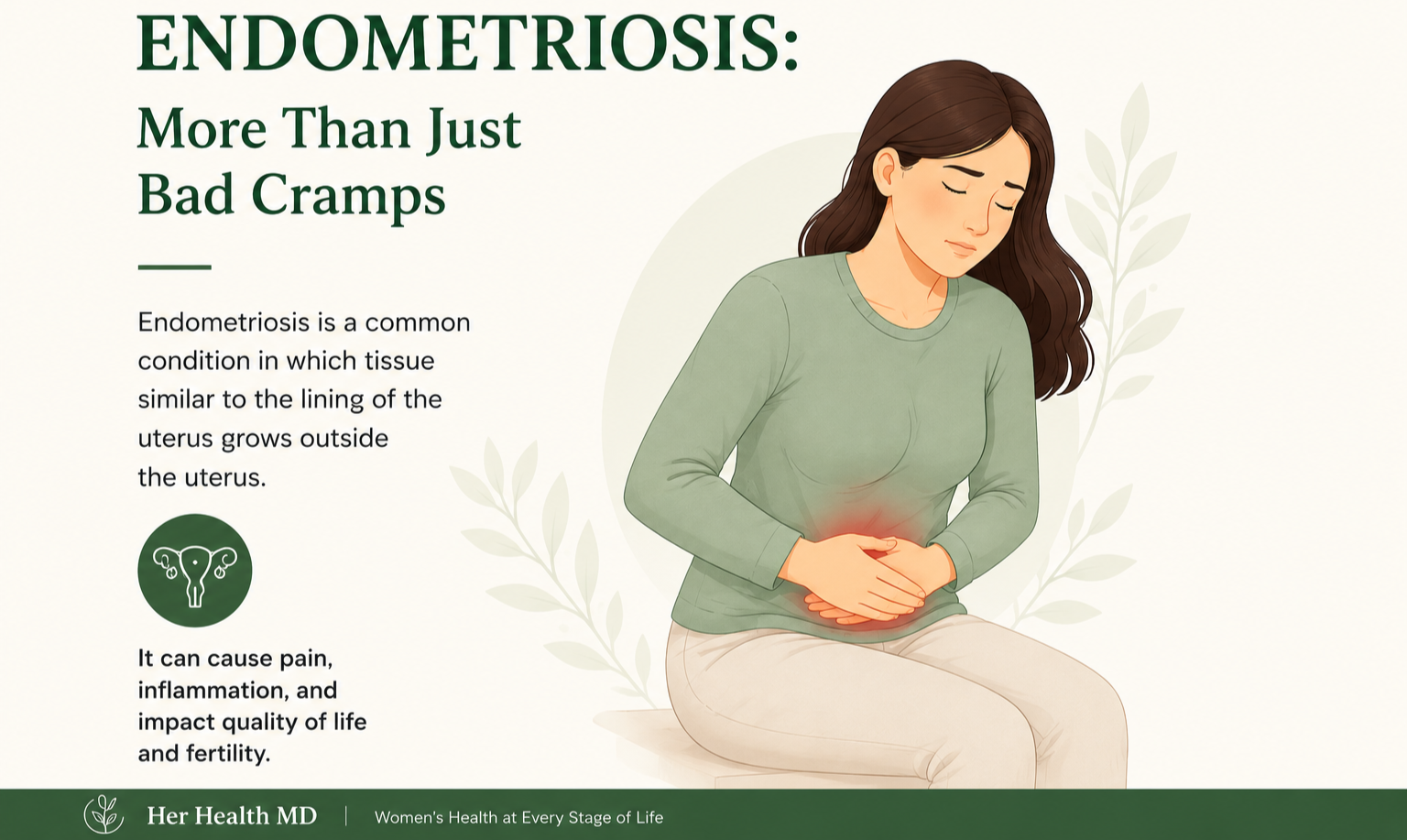
Many women experience menstrual cramps, but severe period pain is not always a normal part of the menstrual cycle.
For some women, painful periods may be a sign of endometriosis—a common but often underdiagnosed condition that affects millions of women worldwide.
Because symptoms can vary widely and diagnosis is often delayed, many women live with endometriosis for years before receiving the care they need.
What Is Endometriosis?
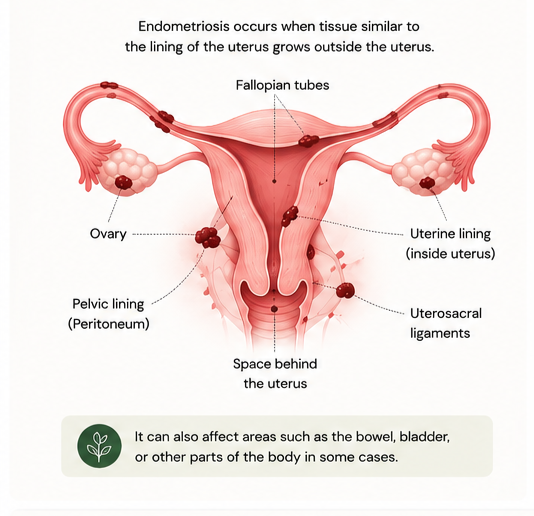
Endometriosis occurs when tissue similar to the lining of the uterus grows outside the uterus.
These growths, called endometriotic lesions, are most commonly found on:
The ovaries
Fallopian tubes
Pelvic lining (peritoneum)
Uterosacral ligaments
The space behind the uterus
Less commonly, endometriosis may affect the bowel, bladder, or other areas of the body.
Like the uterine lining, these tissues respond to hormonal changes during the menstrual cycle. Over time, they can trigger inflammation, scarring, and chronic pain.
Why Does Endometriosis Occur?
The exact cause of endometriosis remains unknown.
Several theories have been proposed, including:
Retrograde Menstruation
One of the most widely accepted theories suggests that menstrual blood flows backward through the fallopian tubes into the pelvic cavity, allowing endometrial-like cells to implant and grow.
Genetics
Endometriosis tends to run in families. Women with a first-degree relative who has endometriosis have a higher risk of developing the condition.
Immune System and Inflammation
Researchers believe that abnormalities in the immune system and chronic inflammation may contribute to the development and progression of endometriosis.
Most experts believe that endometriosis develops through a combination of genetic, hormonal, immune, and environmental factors.
Common Symptoms
Symptoms vary from person to person.
Some women have extensive disease with minimal symptoms, while others experience severe pain despite relatively limited disease.
Common symptoms include:
Painful periods (dysmenorrhea)
Chronic pelvic pain
Pain during sexual intercourse
Pain with bowel movements
Pain with urination during menstruation
Heavy menstrual bleeding
Fatigue
Difficulty becoming pregnant
One important point to remember is that the severity of symptoms does not always reflect the severity of the disease.
How Is Endometriosis Diagnosed?
Diagnosis begins with a careful review of symptoms and medical history.
Your healthcare provider may recommend:
Pelvic examination
Pelvic ultrasound
MRI in selected cases
However, imaging studies may not detect all forms of endometriosis.
Because of this, diagnosis is sometimes delayed for years after symptoms first appear.
Treatment Options
Treatment depends on symptom severity, age, fertility goals, and personal preferences.
Pain Management
Nonsteroidal anti-inflammatory drugs (NSAIDs) may help reduce pain and inflammation.
Hormonal Therapy
Hormonal treatments aim to suppress ovulation and reduce stimulation of endometriotic lesions.
Options may include:
Birth control pills
Progestin therapy
Hormonal intrauterine devices (IUDs)
GnRH agonists or antagonists
Surgical Treatment
Surgery may be considered when symptoms are severe, fertility is affected, or medical treatment has not been effective.
Endometrioma Sclerotherapy
For women with ovarian endometriomas, minimally invasive image-guided treatments such as endometrioma sclerotherapy may be considered in selected cases.
When Should You Seek Medical Attention?
You should consider discussing your symptoms with a healthcare provider if:
Period pain interferes with daily activities
Symptoms are progressively worsening
Pain occurs outside of menstruation
You experience pain during intercourse
You are having difficulty becoming pregnant
Early recognition and treatment may help improve symptoms and quality of life.
The Bottom Line
Endometriosis is more than just painful periods.
It is a chronic condition that can affect physical health, emotional well-being, fertility, and quality of life.
If your symptoms feel more severe than "normal cramps," it may be worth discussing the possibility of endometriosis with your healthcare provider.
Understanding the condition is the first step toward finding the right treatment and improving long-term health.